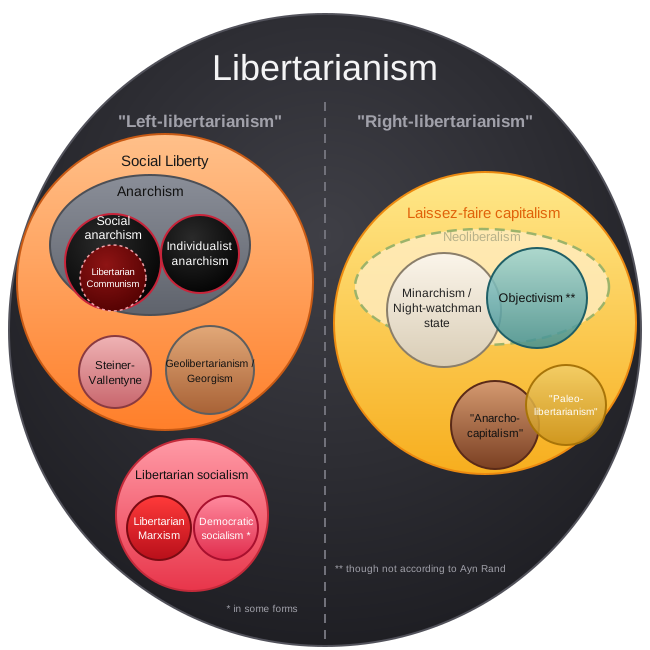
Two groups of people call themselves libertarians. They oppose the same wars, want the same drug laws repealed, defend the same speech, distrust the same police powers, and start from the same moral premise: that every person belongs to themselves […]
Ask why libertarianism is so widely disliked and the answers come back remarkably consistent. [One recent survey of the criticism](https://factually.co/fact-checks/politics/why-is-libertarianism-hated-c21590) sorts them into a few bins: the philosophy is said to put individual rights above any collective claim, to favor […]
Try three claims together and they look like a contradiction. Property is the origin of liberty — the thing that lets a person refuse, walk away, and build a life no one else can veto. Property is theft — Proudhon's […]
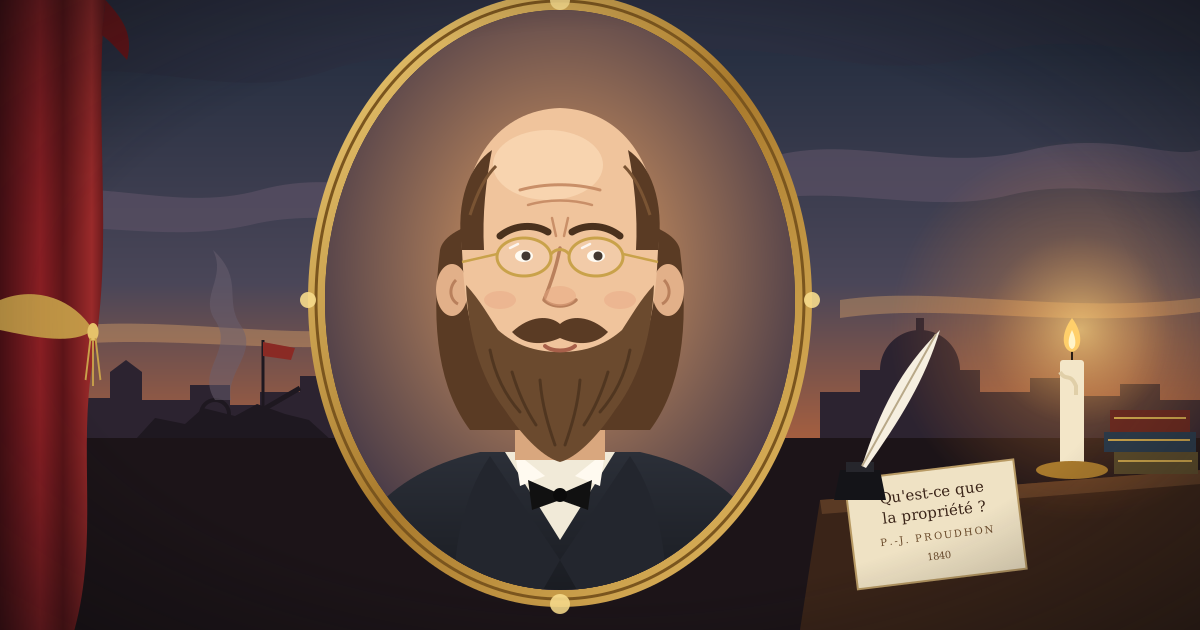
Pierre-Joseph Proudhon gave the nineteenth century one of its most durable lines and then largely vanished from the century that kept quoting it. "Property is theft" outlived the book it came from, the movement it was meant to launch, and, […]
Machinery of Freedom, David Friedman A Saint once said: “Let the perfect city rise. Here needs no long debate on subtleties, Means, end, Let us intend That all be clothed and fed; while one remains Hungry our quarreling but mocks his pains. So all will labor to the good In one phalanx of brotherhood.” A […]
Almost a century and a half ago Thomas Carlyle described economics as “the dismal science.” The term was to stick, especially as it applied to economics premised on a supposedly unavoidable conflict between “insatiable needs” and “scarce natural resources.” In this economics, the limited bounty provided by a supposedly “stingy nature” doomed humanity to economic […]
Usufruct, in Roman-based legal systems, the temporary right to the use and enjoyment of the property of another, without changing the character of the property. This legal concept developed in Roman law and found significant application in the determination of the property interests between a slave held under a usus fructus (Latin: “use and enjoyment”) […]
 Social Liberty