 Social Liberty
The Myth of the Public Steward
The elephant, the cod, and the tomato patch all tell the same story — an owner who has to live with what happens next takes better care of the land than an agency that doesn't.
Click to enlarge
There's a piece of received wisdom so common it rarely gets argued for anymore, only assumed: private owners degrade land, chasing this quarter's yield at the expense of next century's soil, and only a government — a park service, a ministry, a bureau with no shareholders to answer to — can be trusted to manage a resource for the long run. It shows up as the unstated premise behind land nationalization, wildlife bans, and every "keep it out of private hands" argument for a forest, a fishery, or a herd.
It sounds virtuous. It's also, as a general claim, backwards — and the record showing it's backwards isn't obscure. It's some of the best-documented material in environmental economics.
Who owns the outcome
Start with the mechanism, because the empirical record only makes sense once the incentive is visible. A private owner with secure, transferable title is a residual claimant: every dollar of value the land produces or loses over the owner's tenure, and every dollar it's worth when sold or passed on, lands on one balance sheet.
Degrade the soil, deplete the aquifer, let the herd overgraze the range, and the owner is the one holding a less valuable asset next year and the one who eats the cost of restoring it.
Steward it well, and the owner is the one who captures that value, directly, for as long as they hold the title and in the sale price if they don't. Nobody has to mandate good behavior from a residual claimant. The claim is the mandate.
A government land manager holds no such position. They're an agent, not a principal — their career runs on budget cycles and political appointments measured in years, not the multi-decade or multi-generational horizon the resource actually operates on, and the growth or degradation of the range, the forest, or the fish stock ten years past their tenure accrues to nobody in particular, which in practice means it accrues to no one's incentive at all.
Five Centuries Under One Crown already traced what that produces when the asset in question is a five-hundred-year-old tree: an institution that defaults toward whichever action clears its own liability fastest, regardless of what the resource is actually worth over a timescale no one in the room will still be employed to see. Land management runs on the identical clock mismatch, just with herds and stocks instead of trunks.
The record, not the theory
None of this would be worth much as an argument if the historical record ran the other way. It doesn't.
Wildlife conservation in southern Africa is close to a controlled experiment. For most of the twentieth century, African wildlife was state property by default: a colonial and then postcolonial government owned the elephants, the government's wardens managed the parks, and rural communities living alongside the animals had no legal stake in whether they lived or died — an elephant in the village's own backyard was, to that village, exclusively a source of crop damage and a poaching opportunity, since neither its survival nor its death was worth anything to the people actually bearing the cost of its presence. Kenya kept that pure state-ownership model and lost the large majority of its elephant population to poaching between the 1970s and the 1990s. Zimbabwe's CAMPFIRE program and Namibia's communal conservancies did the opposite experiment: they devolved real proprietary rights over wildlife to the communities living with it, letting them capture revenue from regulated hunting and tourism. Poaching fell and wildlife populations recovered in the areas that made the switch, for the most unmysterious reason there is — a herd that pays the community that shares its habitat is a herd that community has a reason to protect from someone else's poachers.
Fisheries tell the same story with numbers instead of animals. The Grand Banks cod fishery was about as thoroughly government-managed as a resource gets — federal quotas, federal science, federal enforcement — and it collapsed anyway in 1992, closed by the same government that had been setting the catch limits, because a bureaucracy answering to this year's fishing communities and this year's political pressure kept setting quotas the stock couldn't sustain. Contrast that with fisheries that moved to individual transferable quotas — Iceland's, New Zealand's, Alaska's halibut and sablefish fleets — which assign each quota holder a durable, tradable share of the total allowable catch. A quota holder with a permanent claim on a fraction of next year's fish has a direct stake in there being a next year's fish, and the race-to-fish dynamic that wrecked the open-access and pure-quota-managed fisheries largely disappears once someone actually owns a piece of the outcome.
The U.S. Forest Service didn't need a collapse to make the point; a century of routine operation did it instead. Fire Policy already covered the doctrine — total wildfire suppression, pursued without interruption from the early twentieth century on — and the fuel load it left behind is still being worked off one contracted thinning project at a time, a century-old bill a public agency wrote and the public is still paying down.
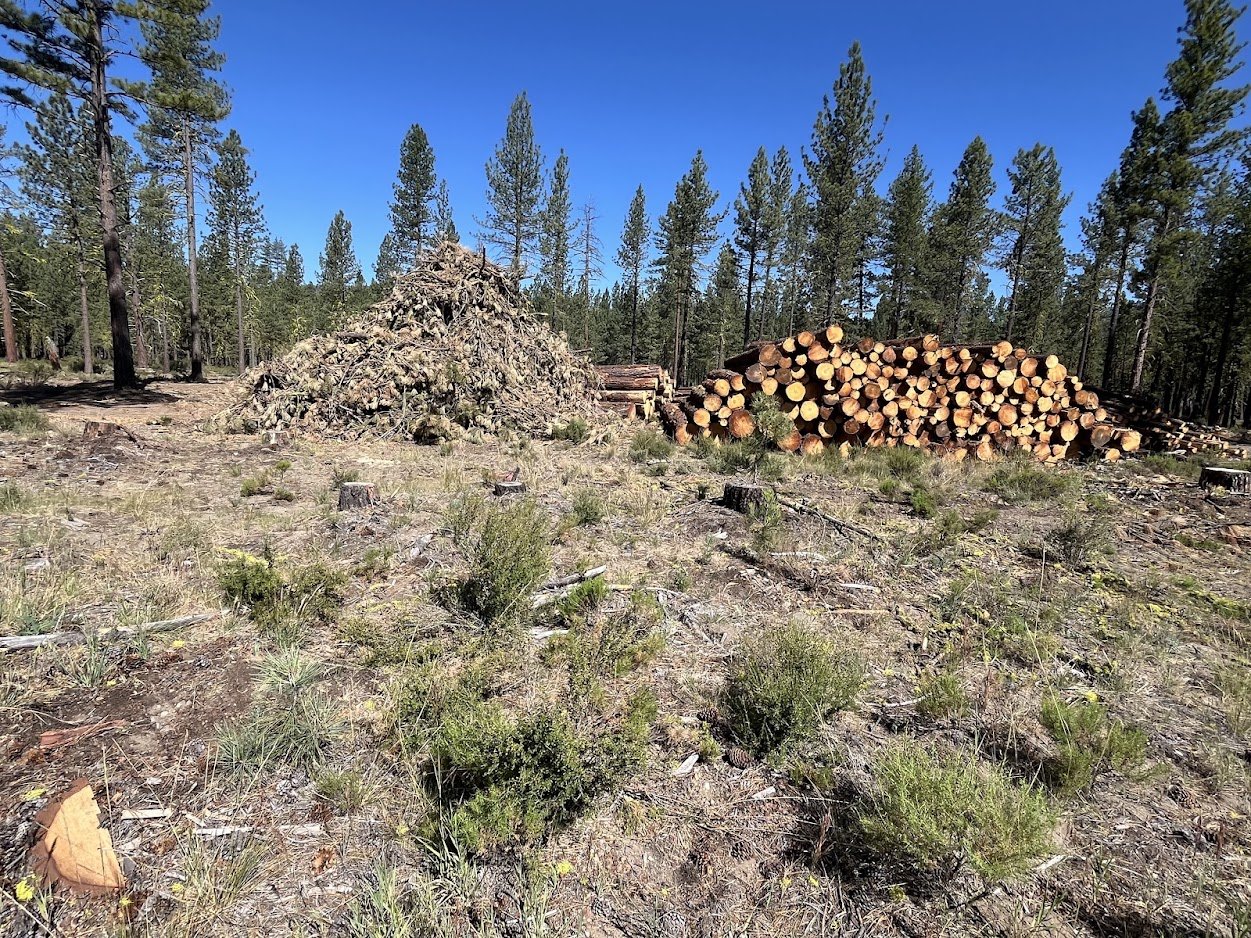
What a century of an agency managing a forest on a budget-year clock actually looks like on the ground: the fuel a fire would have cleared on its own, now stacked for a contractor to remove one unit at a time; a whole land opened to the searing sierra sun.
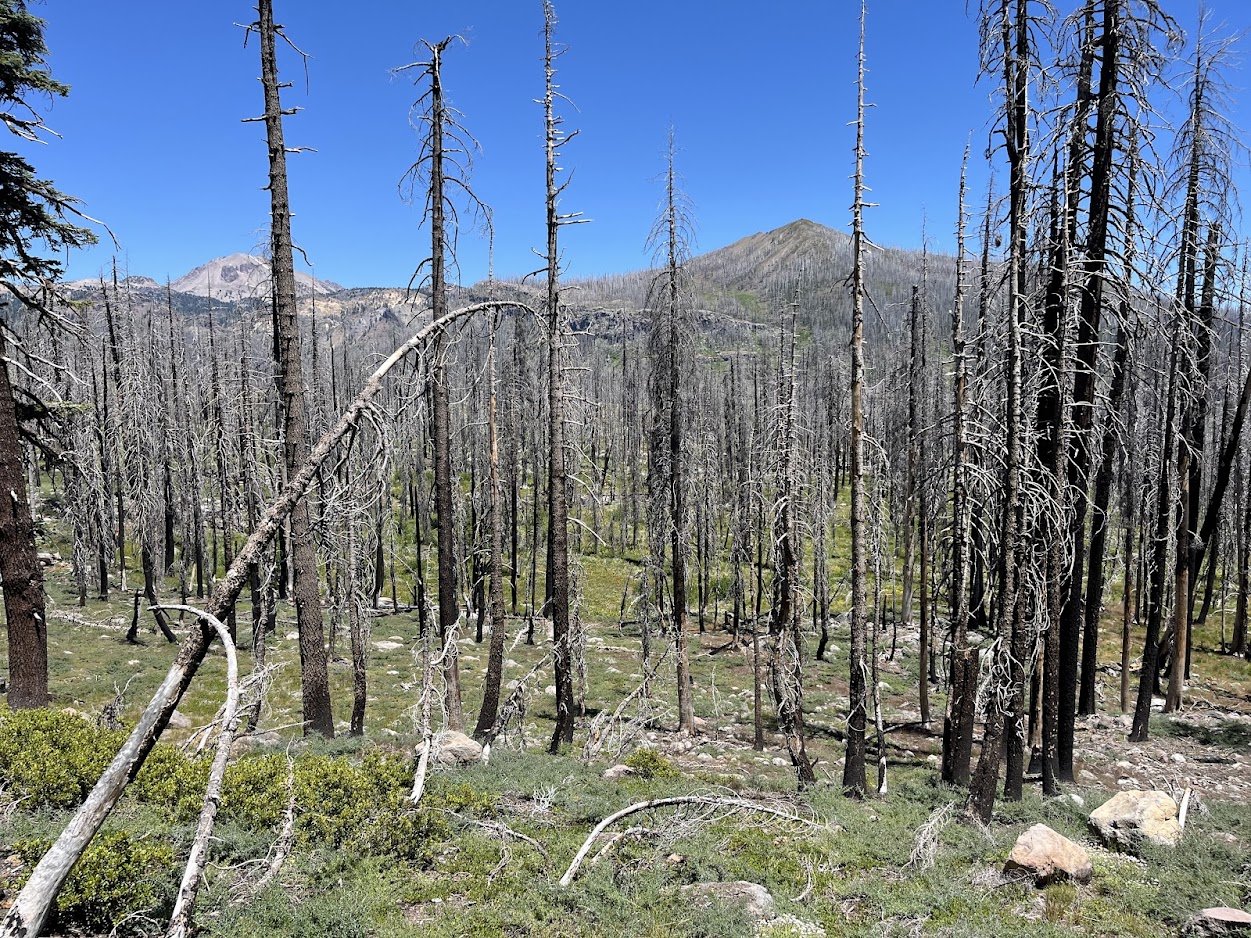
Lassen National Park — government land, under government fire policy, for over a century. This is what the bill looks like when it finally comes due unthinned: not a fire the forest survives, but one it doesn't.
Soviet agriculture ran the comparison inside a single economy. Collective and state farms controlled the overwhelming majority of Soviet arable land; the small private household plots Soviet citizens were allowed to keep — often under a tenth of an acre, sometimes framed by the state as a grudging concession rather than a policy — made up a sliver of total farmland. Those plots nonetheless produced a share of Soviet meat, milk, vegetables, and potatoes wildly out of proportion to their size, year after year, because the household growing food on a fraction of an acre bore the full consequence of neglecting it and captured the full benefit of tending it, in a way no collective farm's workforce ever did with land that belonged, formally, to everyone and therefore functionally to no one.
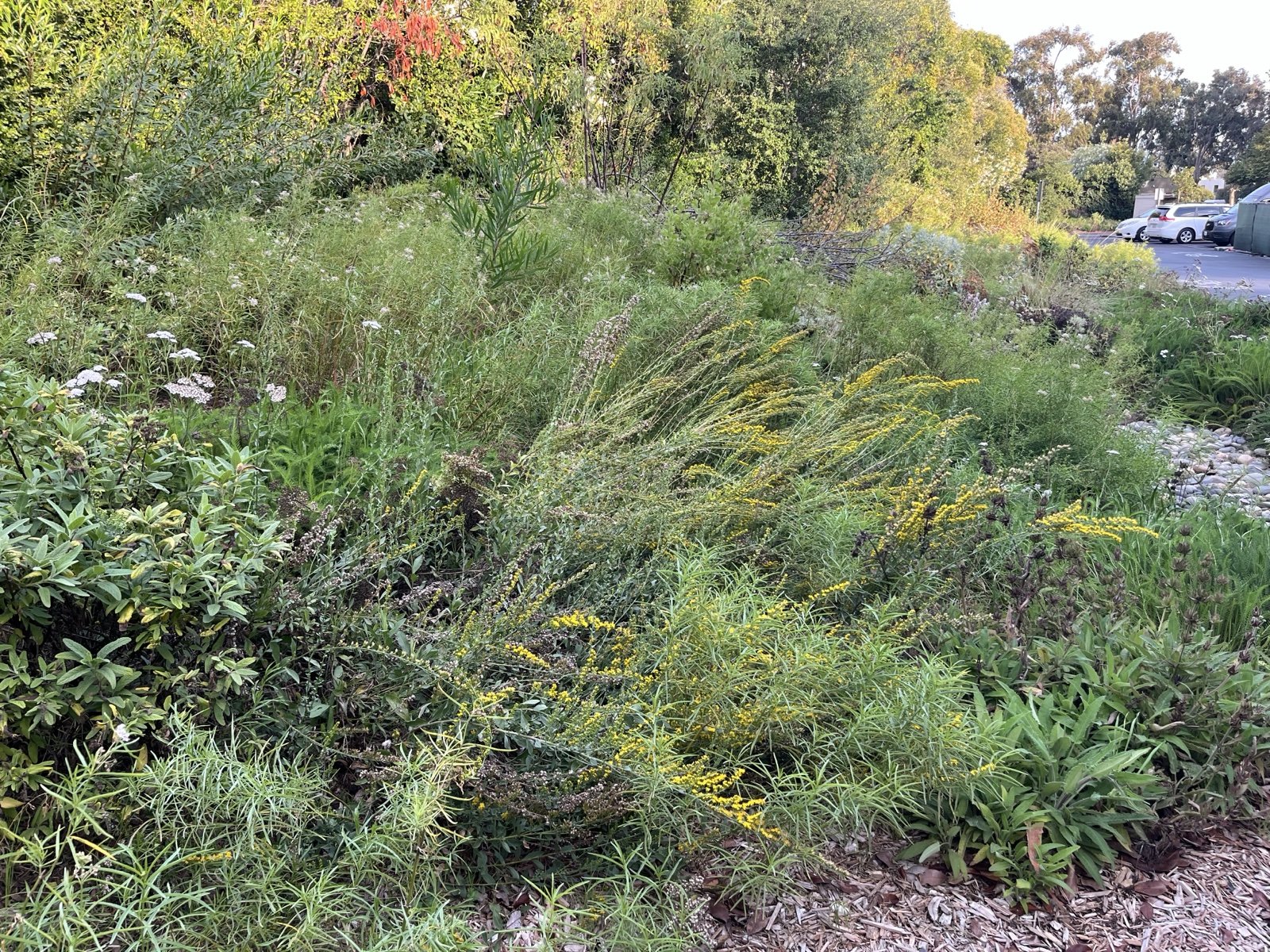
Google restoring the Baylands the way people think government restores the baylands — with actual natives.
The nuance a slogan can't hold
None of this is a brief for the idea that private ownership is automatically virtuous or that a deed is a substitute for accountability. Private owners externalize too — the aquifer drawn down by one farm doesn't stay that farm's problem, the pollution dumped upstream doesn't stay upstream, and a landowner with a short enough time horizon of their own (a lease about to expire, a mine about to be exhausted, a debt about to come due) can behave exactly like the worst version of a government agency, extracting value now and leaving the bill for someone else to find later.
Elinor Ostrom won a Nobel Prize largely for demonstrating this isn't actually a two-option problem — that neither pure private title nor pure state control is the necessary condition for sound stewardship, and that bounded communities with real, durable, locally enforced rules about who gets to use a shared resource and how routinely outperform both, precisely because those rules make every user a genuine stakeholder in the resource's future the same way a title does.
What all three arrangements share, and what the "government stewardship" myth quietly erases, is the actual variable that matters: whether the party making the decision is the same party who lives with its consequences. Sometimes that's a private title. Sometimes it's a conservancy with community-held rights. Sometimes, per Ostrom, it's a well-governed commons with its own enforceable rules. What reliably fails is the fourth option — a distant agency, accountable to a political cycle instead of a stake, managing an asset whose costs and benefits land on people the agency answers to only in the most attenuated sense. That fourth option is exactly what "public stewardship" has usually meant in practice, and it's exactly the arrangement the record keeps failing to vindicate.
Here is where the Georgist case is a narrower, more honest claim than either side of the ownership debate wants to make. The problem was never that someone holds a title. It's that land's value is disproportionately created by the community around it rather than by the owner's own effort — the unearned increment a landowner otherwise captures for free — and a land value tax is a way to return that specific piece to the public without touching the part of the arrangement that actually produces good stewardship: a named, accountable party who owns the consequences of what happens to the land next. Collapse those two questions into one, treat "who captures the rent" and "who has the incentive to steward the resource" as the same question, and you get exactly the confusion this essay opened with — a slogan that sounds like justice and functions, on the actual record, as a machine for producing the outcome it claims to prevent.
A note on how this piece was written: every argument, source, and structural decision in this essay is mine — I chose the examples, worked out the logic connecting them, and directed what each paragraph needed to say. The sentences themselves were drafted with AI assistance from that outline and then edited by hand. I'd rather say that plainly than have a reader guess at it.
Featured in Land Trusts and Liberty