 Social Liberty
Labor Organization
California amends its constitution with a simple majority, once. The federal Constitution needs two-thirds of Congress and three-quarters of the states. The gap between those bars is where organized labor does its most pernicious work.
Click to enlarge
An Industrial Park from a Bloated Government already traced what California's government has become in plain fiscal terms: a general fund that roughly doubled in a decade, a single-year surplus larger than most states' entire budgets, a swing into tens of billions of deficit within two years of that surplus, the largest unsheltered homeless population of any state, and years of residents leaving faster than they arrive.
Underneath those numbers sits a quieter shift, one that shows up less in a budget table than in what the state's own ballot measures assume without argument: California no longer conceives of itself as a referee setting rules for people to act within. It conceives of itself as the provider — of housing, of healthcare, of the environmental review that decides whether either gets built, of the affordability Proposition 45 and the Two Kinds of Delay already found being sold as a byproduct of procedure.
A government that sees itself as the provider of all things needs a very different relationship to consent than a government that sees itself as a referee. It's worth asking directly what kind of consent California's constitution actually requires, and what that requirement is doing to who ends up running it.
The forms consensus can take
Not every "yes" means the same thing, and the differences matter more than they usually get credit for. We the People already drew the sharpest version of this distinction, through Rousseau: the general will is what a community would choose deliberating on its own genuine common interest, while the will of all is simply the sum of whatever private preferences happen to be counted on a given day — the same aggregation mechanism, run over two different kinds of input, producing results that can diverge sharply from each other.
That essay also brought in Arrow's and Condorcet's formal results on when a crowd's combined judgment can and can't be trusted, and Madison's own answer in Federalist No. 10: representation exists specifically to "refine and enlarge the public view," filtering raw sentiment through deliberation rather than simply tallying it.
A simple majority vote, held once, is the will-of-all mechanism in its purest form — fast, legible, and structurally indifferent to whether the people voting have actually deliberated on anything or are responding to whichever campaign spent the most in the closing weeks.
A supermajority requirement, or a requirement that consent be renewed across multiple independent bodies over time, is a crude but real approximation of the general-will standard: it forces a proposal to survive contact with more than one faction's current enthusiasm before it becomes permanent.
What the Constitution actually says about this
The framers didn't leave this as an abstract preference. Article V sets the amendment bar deliberately high — two-thirds of both houses of Congress to propose a change, three-quarters of the states to ratify it — and the result is exactly what that bar was built to produce: 27 amendments in 237 years, ten of which arrived together as the Bill of Rights within the Constitution's first three years, leaving only seventeen in the roughly 230 years since.
Madison explained the reasoning directly in Federalist No. 49, arguing against Jefferson's own proposal to let conventions revise the constitution more freely: frequent appeals to the people to alter their fundamental law, he wrote, would deprive government of "that veneration which time bestows on every thing, and without which perhaps the wisest and freest governments would not possess the requisite stability."
A constitution amended constantly stops functioning as a shared, load-bearing structure and starts functioning as whatever the last winning coalition wanted, ratified under the same name as everything that came before it. The high bar isn't friction for its own sake. It's the mechanism by which "the people" comes to mean something more durable than "whoever turned out this cycle."
California chose the opposite bar
California's constitution runs on the reverse premise, and it runs on it by design going back to the Progressive Era reforms of 1911: a citizen-initiated constitutional amendment needs only a simple majority of voters, no legislative supermajority, no ratification by a second body, no waiting period for the enthusiasm to cool.
The result is on the public record: California's constitution has been amended more than five hundred times since 1879, making it one of the longest and most frequently revised constitutions of any government on Earth, state or national. Where Article V produces seventeen amendments in two centuries by requiring broad, cross-factional, multi-stage consent, California's initiative process can produce that many in a single decade by requiring only whoever shows up once.
The faction that thrives in that gap
Madison's Federalist No. 10 named the risk a low bar like this was always going to create: a faction, a group united by a common interest adverse to the rest of the community, does its best work exactly where the barriers to acting on that interest are lowest. California's own public-sector labor unions are the clearest instance of that risk actually realized, not because organizing workers is illegitimate, but because a union representing government employees is, structurally, organizing to expand the very government whose budget pays its members — a feedback loop with no equivalent on the taxpayer's side of the ledger, where the cost is diffuse and nobody is paid to show up and defend against it.
The California Teachers Association alone has spent hundreds of millions of dollars across the last two decades on ballot campaigns and candidate races, consistently ranking among the state's largest political spenders in any given cycle, alongside SEIU's California locals and the corrections officers' union — each one a well-resourced, standing organization built to win exactly the kind of single, simple-majority vote California's constitution asks for, up against a general public that has to reassemble its attention and its coalition from scratch every time.
That's the mechanism, not a conspiracy: a low consensus bar rewards whoever is already organized enough to clear it repeatedly, and organized labor, particularly public-sector labor, is one of the only factions in California politics built for exactly that kind of repeated, well-funded, single-vote campaign. The state becoming the provider of all things and the state's own employees' unions becoming its most reliable kingmakers are not two separate stories. They're the same story, running through a constitution that was built, on purpose, to make that outcome easy.
It isn't abstract. An Industrial Park from a Bloated Government described a masticator crew grading a neighborhood park flat under a state resilience contract, funded by the same budget this essay has been tracing back to its source, staffed by exactly the kind of public-sector labor this section describes, authorized under an exemption doctrine no parks commission got a vote on. The crew wasn't a rogue contractor. It was the provider state's own budget, expanded year over year by the same organized bargaining this section has been describing, doing the one thing that budget is actually built to keep doing: funding its own continued growth, one contract at a time, regardless of what happened to be growing on the ground it graded.
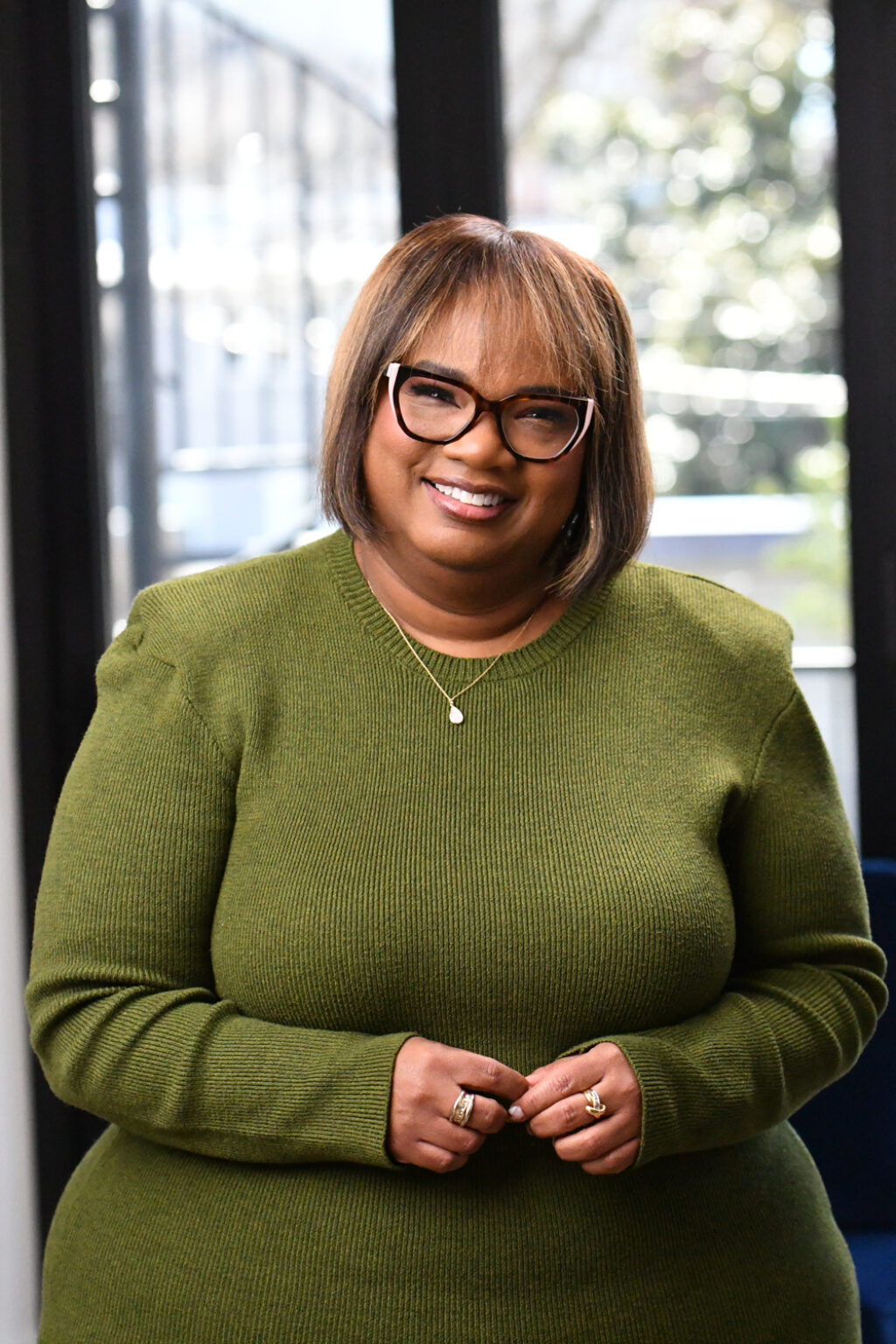
It's worth engaging the strongest version of the other side's own account of this directly rather than only the mechanism. SEIU International President April Verrett, responding to a 2025 federal executive order targeting public-sector bargaining rights, put the case for government unions in explicitly non-political terms:
"America's public service workers don't work for profits, politics, or for glory – they serve our nation."
That line is the compressed version of a fuller stated vision she's built her presidency around: unions as a platform capable of eradicating generational poverty and dismantling structural racism, built on collective action across racial, economic, and geographic lines; a "thriving, not just surviving" standard of affordable healthcare, retirement security, and wages that don't just cover the bills; corporate and billionaire accountability on taxes; a "whole worker" view of union responsibility that reaches into mental health and community support rather than stopping at wages and grievance procedures; and an explicitly anti-racist, pro-immigrant labor movement built around empowering Black and Brown workers.
None of that is a cynical mission statement, and treating it as one would be the weak version of this essay's argument. It's also, point for point, a set of goals none of which actually require the specific mechanism this section has been describing. Corporate accountability, wage floors, healthcare access, an anti-racist labor movement — every one of those is a legitimate thing to organize around in the private-sector bargaining this essay already defended without reservation above, where the employer on the other side of the table is a market participant that can be out-competed, boycotted, or bargained with under real mutual constraint.
What Verrett's vision doesn't explain is why achieving it, specifically for public employees, requires bargaining leverage against a monopoly employer with no competitor and no exit — that's a separate claim from the vision itself, and it's the one claim the vision's moral force gets used to carry without ever actually being argued for on its own.
The faction problem was never about any individual member's motive, or even about the sincerity of the institution's stated goals. It's about what an organization built to represent millions of people, however genuinely mission-driven, is then structurally positioned to do with a state whose constitution asks for nothing more than a simple majority, once, to expand the very budget that pays them.
Verrett's claim and this essay's argument aren't actually in tension — service to the public, a genuinely held vision of racial and economic justice, and organized political leverage over the public's own government are compatible descriptions of the same institution, which is exactly why the institution is so hard to argue against on the terms it prefers to be described in.
Modern housing law as the same distortion
California's own so-called housing-streamlining statutes are the clearest instance yet of the mechanism running inside a law explicitly written to solve the crisis Proposition 45 and the Two Kinds of Delay already found being sold under the same banner. SB 35 (2017) and AB 2011 (2022) both let qualifying housing skip the CEQA gauntlet and local discretionary review entirely — a genuine, structural fix to the boundary problem this site has spent real effort naming.
Both bills also carry a rider that had nothing to do with environmental review at all: SB 35 requires prevailing wage on any qualifying project of ten or more units and a "skilled and trained workforce" requirement — effectively a union-hiring hall standard — on projects above fifty; AB 2011 attaches the identical prevailing-wage and skilled-and-trained-workforce conditions to its own by-right commercial-to-housing conversion. Neither condition was in either bill for environmental reasons. Both were the price the State Building and Construction Trades Council of California negotiated for not opposing the bill, in a legislature where that council's opposition is close to a functional veto.
The distortion isn't hypothetical. Economists studying California's own streamlining laws have found prevailing-wage and skilled-and-trained-workforce mandates add on the order of 20 percent to multifamily construction costs, on top of a state where construction costs were already among the highest in the country — which means a meaningful share of the projects these bills were designed to unlock still don't pencil out financially once the labor condition is priced in. The bill fixes the boundary problem and reintroduces the fiscal one in the same paragraph: a project that clears every environmental hurdle can still die on a spreadsheet, for a reason that has nothing to do with anything The Municipal Trilemma named as a legitimate structural trap.
That's the pattern this whole essay has been describing, in its most concrete legislative form. A union didn't need to win a ballot initiative or hold a strike to shape this outcome. It needed a seat at the table while a popular, well-intentioned housing bill was being drafted, and the leverage to make its own unrelated condition the price of the bill moving at all — the same low-bar, well-organized-faction advantage described above, now embedded directly in statutory text rather than fought out at the ballot box.
Two employers, not one kind of union
None of this is an argument against organized labor as such, and it would be dishonest to let the rest of this essay imply otherwise. A union bargaining against a private employer is two voluntary parties meeting inside a market that still disciplines both of them — the employer can lose customers, go bankrupt, relocate, or automate the job away, and the union's leverage is bounded by the real possibility that pushing too hard costs its own members the jobs they're bargaining over. That's ordinary freedom of association, the same Personal Sovereignty this site defends everywhere else, and social liberty has no quarrel with it.
A union bargaining against a government is not the same transaction wearing a different uniform. The "employer" on the other side of the table isn't a firm risking its own capital — it's the public, funded through compulsory taxation, facing a monopoly provider with no competitor to switch to and no exit available the way a customer can walk away from a bad private firm.
There is no bankruptcy discipline on the other side of a public-sector contract, no market price correcting an unsustainable settlement, only a future budget and a future taxpayer who weren't in the room.
A union that controls government isn't a market participant anymore. It's one party to a bargain appointing itself the other party's representative too, which is the exact inversion of consent this essay has been describing since the first section, now given its clearest possible form.
The Union and the unions
The two versions of the word aren't interchangeable, and the essay so far has been describing only the plural one. The unions — CTA, SEIU's California locals, the corrections officers — are separate organizations with separate memberships, separate contracts, separate ballot campaigns fought on their own particular interests, and treating them as a single bloc understates how much of California's provider-state politics is actually several factions pursuing overlapping but distinct agendas.
The Union, singular, capitalized, is the different and sharper thing: what those separate organizations become when they act in concert, or when any one of them exercises the leverage a government employer specifically cannot walk away from — a coordinated strike, a work stoppage, a threat to withhold a service the public has no alternative provider for. That's not a metaphor for organizing power.
It's the literal mechanism, and it's exactly what Franklin Roosevelt — no opponent of private-sector labor — warned against in a 1937 letter refusing to recognize collective bargaining for federal employees at all: "a strike of public employees manifests nothing less than an intent on their part to prevent or obstruct the operations of Government until their demands are satisfied," he wrote, calling the prospect "unthinkable and intolerable" precisely because a government worker's employer has no competitor, and a citizen denied a service during a public-sector strike has nowhere else to take the business.
That's the Union this section means: not the many particular unions competing for a ballot majority, which is Madison's faction problem, but the single, unified leverage any of them can exercise the moment negotiation becomes a threat to withhold something the public has no substitute for.
California's low-bar constitution explains why the unions keep winning individual votes. FDR's 1937 objection explains why the Union, once it stops asking and starts withholding, was never actually playing the same game as any other faction in Federalist No. 10's account — because no other faction in that account gets to hold the government's own operations hostage to make its case.
We the People is the Constitution's own name for the general will this essay has been measuring everything against — the durable, cross-factional thing a genuine consensus mechanism is supposed to protect. Set the two capitalized names next to each other and the arithmetic gets uncomfortable fast: a bargain extracted from a government with a hostage instead of an argument was never actually won by consent, it was won around it. When the Union wins that way, the People aren't the other party to the negotiation. They're the leverage.
The strike is the rare, visible instance, which is exactly why it's the wrong place to look for the Union's actual reach. Most of what it wins never becomes a headline at all — a staffing ratio, a seniority rule, a curriculum requirement, a budget line renewed on autopilot from a contract negotiated a decade before anyone currently affected by it was old enough to vote. Cultures of Life and Death already named this pattern through Durkheim: a social fact this settled doesn't announce itself as a choice someone made. It presents itself as simply how a school, a DMV line, or a state agency is, the way weather is.
A resident who has never once thought about who the Union is has still spent their whole life inside decisions it made, which is a more complete kind of control than any strike threat could manage on its own — not because anyone is hiding it, but because a settlement repeated often enough for long enough stops looking like a settlement at all.
The strategy scales past one state
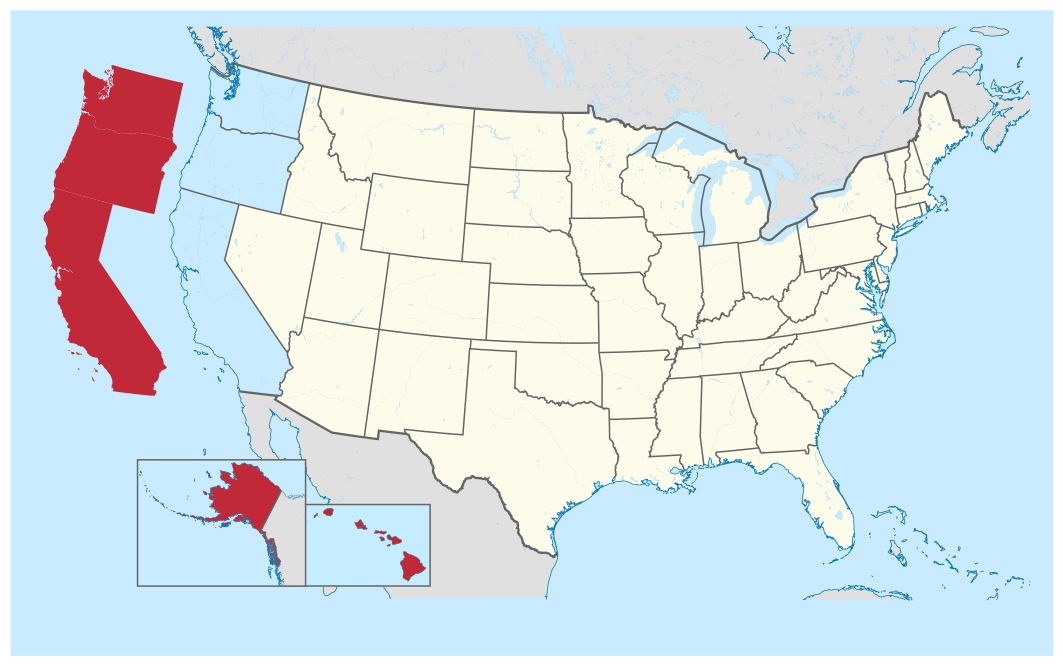
Everything so far has treated California's low bar as a problem contained within California, and it's worth naming the version of this that isn't contained at all. In April 2020, the governors of California, Oregon, and Washington announced the Western States Pact, coordinating pandemic policy across the three states as a bloc, explicitly independent of federal guidance — Nevada and Colorado joined soon after.
No amendment was involved, no legislature voted, no constitutional process of any kind was invoked on either side. Three, then five, executives simply agreed with each other, and a shared West Coast policy identity existed the next morning that hadn't existed the night before.
That's the same low-consensus-bar logic this essay has been describing, run one level further out. If a single state's own constitution can be amended by whoever shows up once, a coalition of states can be organized by whoever holds the governor's office once, with a lower bar still — no voters at all, just agreement among a handful of executives who already share the provider-state premise this essay opened with. The pitch underneath that kind of coordination isn't subtle once it's stated plainly: a region large enough, wealthy enough, and administratively confident enough doesn't need the older federal constitutional order's spirit of earned, cross-factional consent, because a sufficiently capable state can simply provide what its residents need and organize their lives directly, the same relationship the Constitution's framers spent Article V trying to keep any single government from being able to claim over its people without asking twice.
That premise is worth taking seriously as a strategy rather than dismissing as rhetoric, because it's the logical endpoint of everything the rest of this essay has traced. A provider state that has already stopped needing broad consent to expand at home has no particular reason to start needing it to expand its reach outward — the same faction, the same low bar, the same organized labor doing the work of building consensus that was never actually put to a vote, just applied across a wider map.
Does California have to go the way of the American Constitution
The honest answer isn't a clean yes. Raising California's amendment bar to something closer to Article V's — a supermajority, a second ratifying body, a cooling-off period before a measure can take effect — would do real work against exactly the faction-capture problem this essay just described, forcing any future expansion of the provider state to survive more than one election cycle's organized enthusiasm before it becomes permanent.
But the honest complication has to be named too, the way The Municipality Against the State named Bookchin's strongest objections rather than only the weak ones. A higher bar doesn't just make it harder for a well-organized faction to win. It makes it harder for anyone to win, which means it also protects whatever the status quo happens to be the day the bar goes up — including a status quo that already favors the same organized incumbents this essay is worried about. Supermajority rules are not neutral between change and stasis; they're a standing advantage for whoever already has what they want. A California that raised its own bar tomorrow would very possibly just be entrenching this decade's provider-state consensus against next decade's correction, rather than protecting deliberation as such.
The Constitution's own framers had an answer this site has already taken seriously elsewhere: it isn't the bar's height alone that does the work, it's whether the bar forces a proposal to survive contact with a genuinely different body of judgment rather than the same faction voting twice. California doesn't need Article V's exact numbers. It needs some version of Article V's actual mechanism — consent that has to be won more than once, from more than one constituency, before it gets to call itself permanent.
Sources: U.S. Constitution, Article V; James Madison, Federalist No. 10 and Federalist No. 49; California Secretary of State, historical ballot measure records; National Conference of State Legislatures, state constitutional amendment procedures; California Fair Political Practices Commission and CalMatters campaign finance reporting on California Teachers Association and public-sector union political spending; SEIU, "SEIU's Verrett: Executive Order Attacking Federal Unions is an Attack on All Workers" (2025); Franklin D. Roosevelt, letter to Luther C. Steward, President of the National Federation of Federal Employees (August 16, 1937); Office of Governor Gavin Newsom, announcement of the Western States Pact with Oregon and Washington (April 13, 2020), later joined by Nevada and Colorado.