Murray Bookchin For some two centuries, anarchism — a very ecumenical body of anti-authoritarian ideas — developed in the tension between two basically contradictory tendencies: a personalistic commitment to individual autonomy and a collectivist commitment to social freedom. These tendencies have by no means been reconciled in the history of libertarian thought. Indeed, for much […]
Introduction This series of articles on libertarian approaches to mid-level state political office that attempts to answer the question: do libertarians know how to actually govern? We are seeing an upsurge in the interest of influencing local elections…municipal councils, county supervisors, school boards, assessors, state senate and assembly, water districts. A libertarian approach to […]
The Majesty of the Law When I was seven years old, playing in front of our house on the outskirts of Brooklyn one morning, a policeman stopped and chatted with me for a few moments. He was a kindly man, of a Scandinavian blonde type with pleasant blue eyes, and I took to him at […]
— edited from lew rockwell We have been all too familiar in recent years with the phenomenon of Big Government Conservatives, of people who have betrayed and seemingly forgotten their principles and their heritage in a quest for power and pelf, for respectability and for access to the corridors of power, people who have moved […]
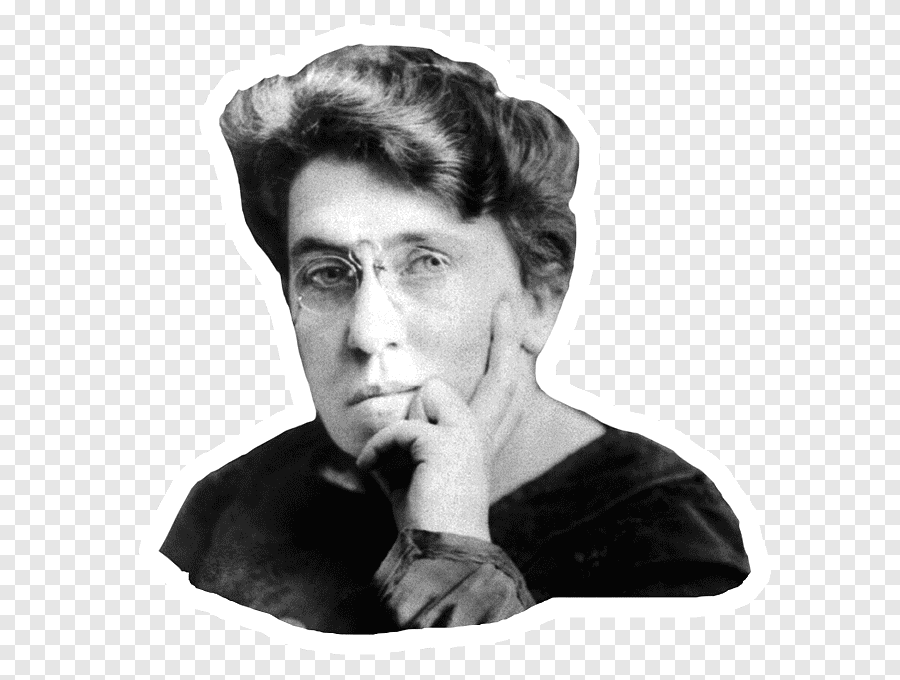
Emma Goldman The history of human growth and development is at the same time the history of the terrible struggle of every new idea heralding the approach of a brighter dawn. In its tenacious hold on tradition, the Old has never hesitated to make use of the foulest and cruelest means to stay the advent […]
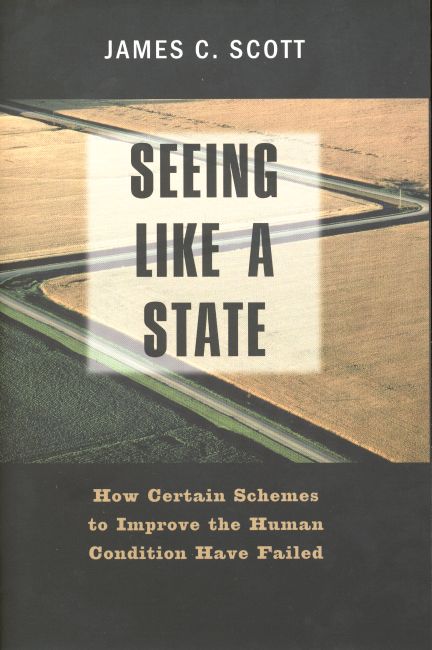
Cass R. Sunstein, More is Less, in The New Republic, at 37 (May 18, 1998) A German psychologist named Dietrich Dorner has done some fascinating experiments designed to see whether people can engage in successful social engineering. The experiments are run by a computer. Participants are asked to solve problems faced by the inhabitants of […]
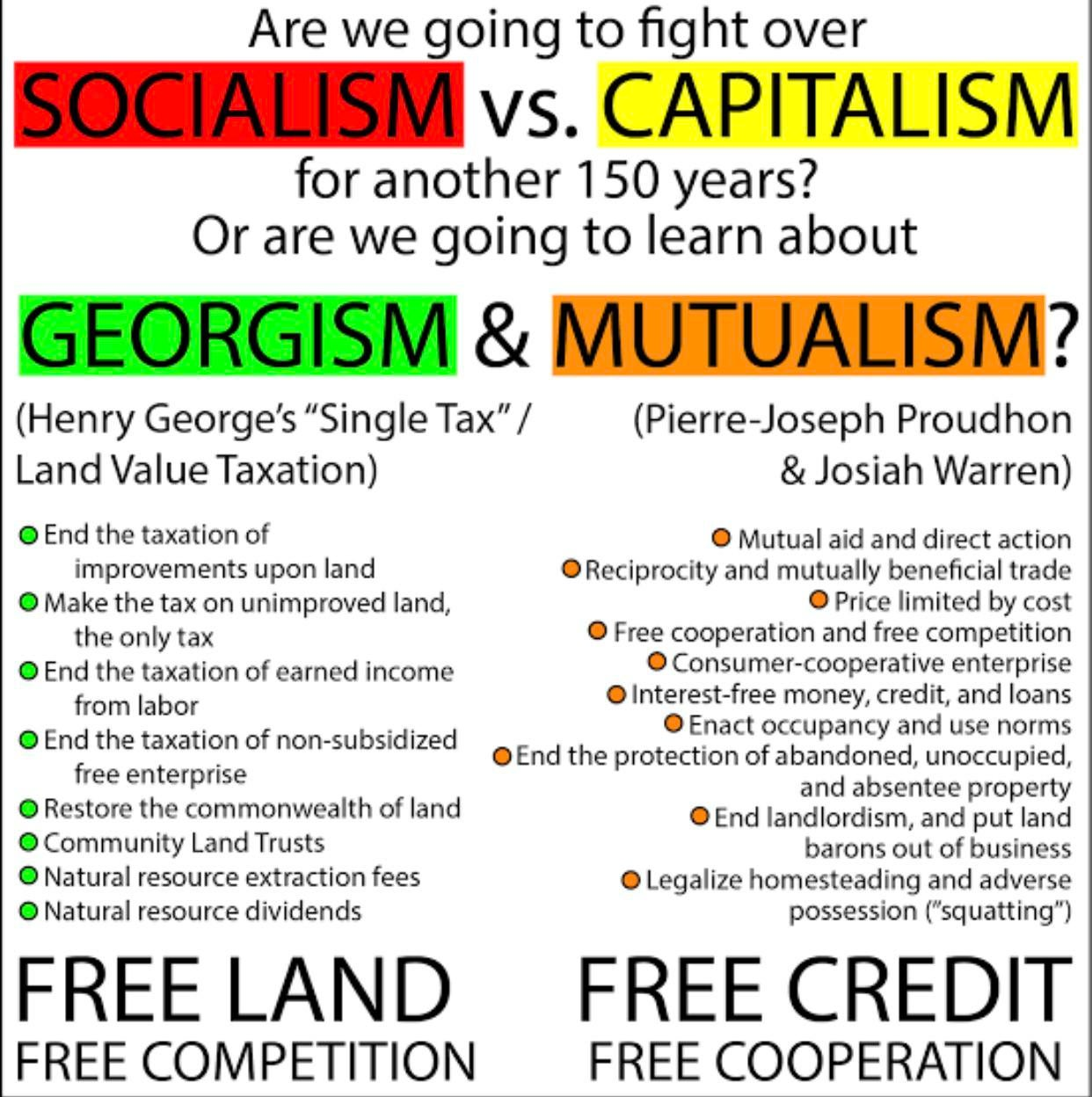
https://www.reddit.com/r/georgism/comments/qaf39r/how_would_geomutualism_work_in_practice_is_it/ I feel like this poster doesn’t understand what capitalism or socialism are. If by capitalism and socialism, it means neo-liberal capitalism and state socialism, then yes, mutualism and Georgism are two ideologies outside this paradigm. Capitalism is the control of capital by single people, who pay their workers wages, while keeping the […]
Marcel Wissenburg ABSTRACT Libertarians are not famed as friends of nature – but is that a matter of principle? I examine consequentialist, deontological and teleological versions of left- and right-libertarianism on three dimensions: their concepts of natural law, geo- and biological nature, and human nature – the latter subdivided into what characterizes humans and what […]
Implement the universal ethic into the constitution, so that there be no restriction or imposed cost on acts which do not coercively harm others. Replace existing taxes with public revenue from user fees, pollution charges, and land value. Replace mass democracy with cellular democracy: small-group voting with bottom-up multi-level governance.
Fred Folvary Introduction Conventional macroeconomics lacks a warranted explanation of the major business cycle, while the Austrian and geo-economic (Georgist) schools have incomplete theories. A geo-Austrian synthesis, in contrast, provides a potent theory consistent with historical cycles and with explanations about the root causes. The geo-economic and Austrian schools have had little interaction in the […]
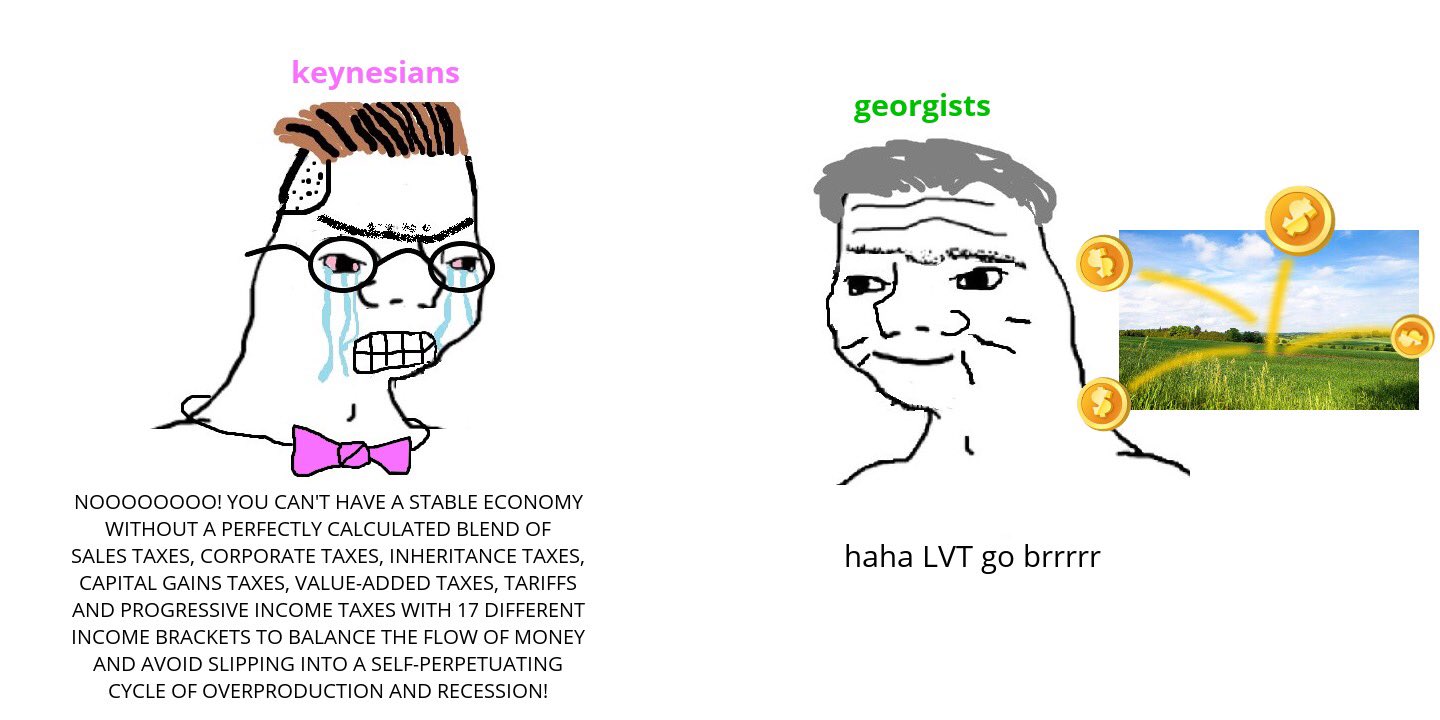
Land value taxation is impeded by the same national sentiment that has reacted so strongly to the Supreme Court’s Kelo decision. That decision has sparked an intense national debate over the private property versus land use regulation and, ultimately, over the ability government to define a “public purpose.” State legislatures across the country are in […]
from John Ikerd, July 2008 In 1879, Henry George, a journalist and philosopher, proposed to abolish all taxation save that upon land values in his classic book, Progress and Poverty. He suggested that people were not poor because of any lack of productivity of either natural or human resources, but instead because of distribution of […]
Probably no agitation has ever attained the magnitude, either in the number of its recruits or the area of its influence, which has been attained by Modern Socialism, and at the same time been so little understood and so misunderstood, not only by the hostile and the indifferent, but by the friendly, and even by […]
 Social Liberty